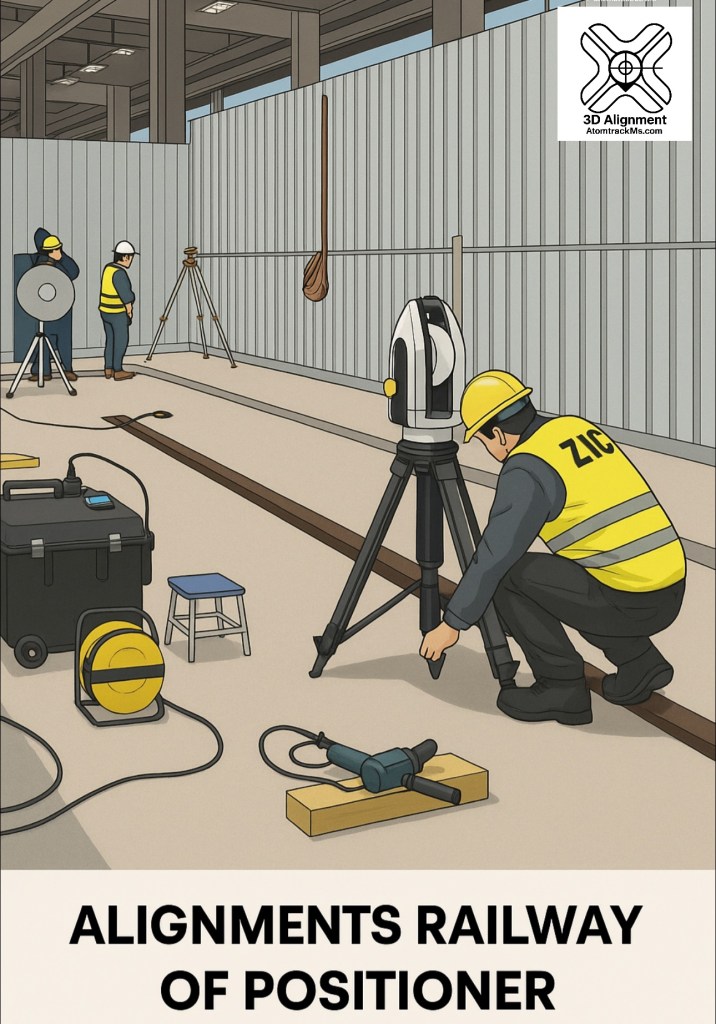
The Importance of Railway Alignment for Positioners
In modern industrial environments, the alignment of railway tracks for positioners plays a crucial role in ensuring precision, safety, and efficiency. Positioners are commonly used in heavy industries, such as railway manufacturing, shipbuilding, and large-scale machinery assembly. Their function relies heavily on accurate rail alignment to guarantee smooth operation and dependable results.
1. Precision in Operation
Proper alignment ensures that the positioner moves precisely along the designed path. Any misalignment can lead to dimensional errors during assembly or production, which directly affects product quality and reliability.
2. Safety for Workers and Equipment
A misaligned rail may create instability, vibration, or excessive friction. These conditions not only cause mechanical failures but also pose safety risks to operators and maintenance personnel working in the area.
3. Extended Equipment Lifetime
Accurate alignment minimizes unnecessary wear and tear on both the positioner and the railway tracks. By reducing friction and uneven loading, the system can achieve a longer service life and lower maintenance costs.
4. Cost and Time Efficiency
Performing alignment correctly from the beginning helps to reduce rework, production downtime, and costly corrections. This efficiency translates into faster project completion and significant cost savings for the organization.
5. Compliance with International Standards
Many industries must comply with strict quality and safety standards, such as ISO requirements. Proper alignment ensures that operations meet these standards, strengthening the credibility and competitiveness of the organization in global markets.
Conclusion
Railway alignment for positioners is more than just a technical task. It is a critical foundation for operational success, influencing safety, product quality, cost efficiency, and equipment longevity. When carried out with precision and care, alignment supports smooth operations and helps organizations maintain international standards in today’s competitive industrial landscape.
 Atom Instrument Service 2018 Co., Ltd.